ANALYSIS #02
How I'd grow Lemlist
$40M without investors, 50,000 customers and a website that doesn't tell the full story.
8 min read · April 2026
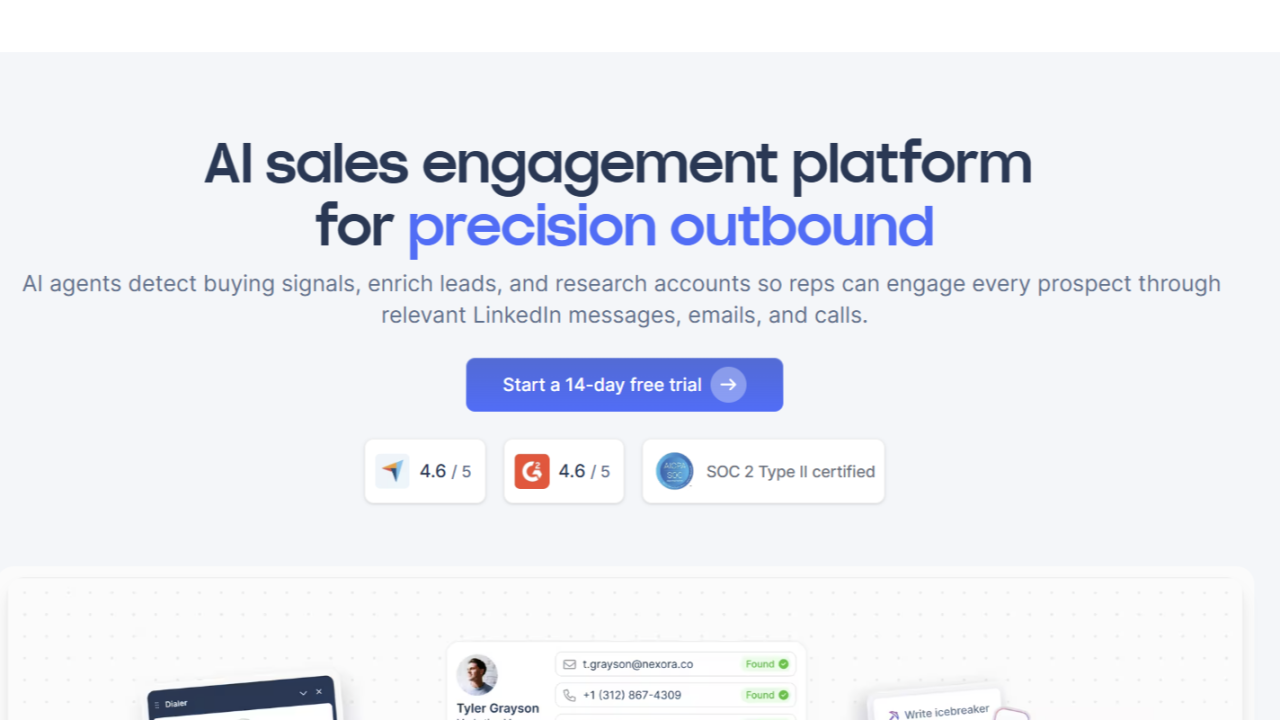
Lemlist turned down $50M from investors, grew to $40M in revenue with 90 people, and bought a company for $25M with its own profits. The first thing you see on their website: "AI sales engagement platform for precision outbound." What their customers actually want: more meetings and more sales. The gap between those two sentences is where this edition starts.
From one thousand euros to $40M without a single investor
Guillaume Moubeche started Lemlist in 2018 with one thousand euros. Today it generates $40M a year, has 50,000 customers and a team of 90. All without accepting a single euro of external capital.
The product is a multichannel prospecting platform: email, LinkedIn, calls, WhatsApp. It includes lemwarm, which makes sure your emails land in the inbox, not spam. It comes with every plan, and their competitors don't have it built in.
The business model is SaaS per user: from $55/month on the annual plan (email only) to $109/month (multichannel). Plus data enrichment credits and add-ons that scale with usage.
Direct competitors: Instantly for price ($30/month, unlimited sends), Apollo for database (210M+ contacts with CRM), Outreach and Salesloft for enterprise. Lemlist sits in the middle: not the cheapest, not the deepest on data, not enterprise.
What's working
The first asset is Guillaume. 360K followers on LinkedIn, 225K on Instagram, a published book. 90% of revenue is organic and there's no large sales team. The founder's content generates the demand that feeds the product.
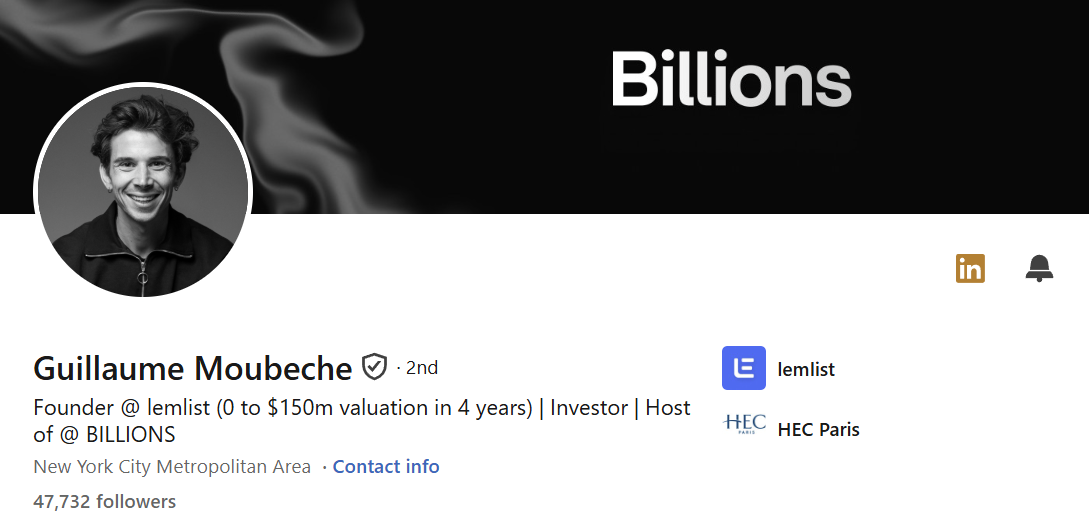
It's content that a salesperson or founder reads and thinks "that happens to me." The best hire he ever made. What happens when a founder invests everything in the company but nothing in themselves. He talks about what hurts his audience, and that builds trust before anyone visits lemlist.com.
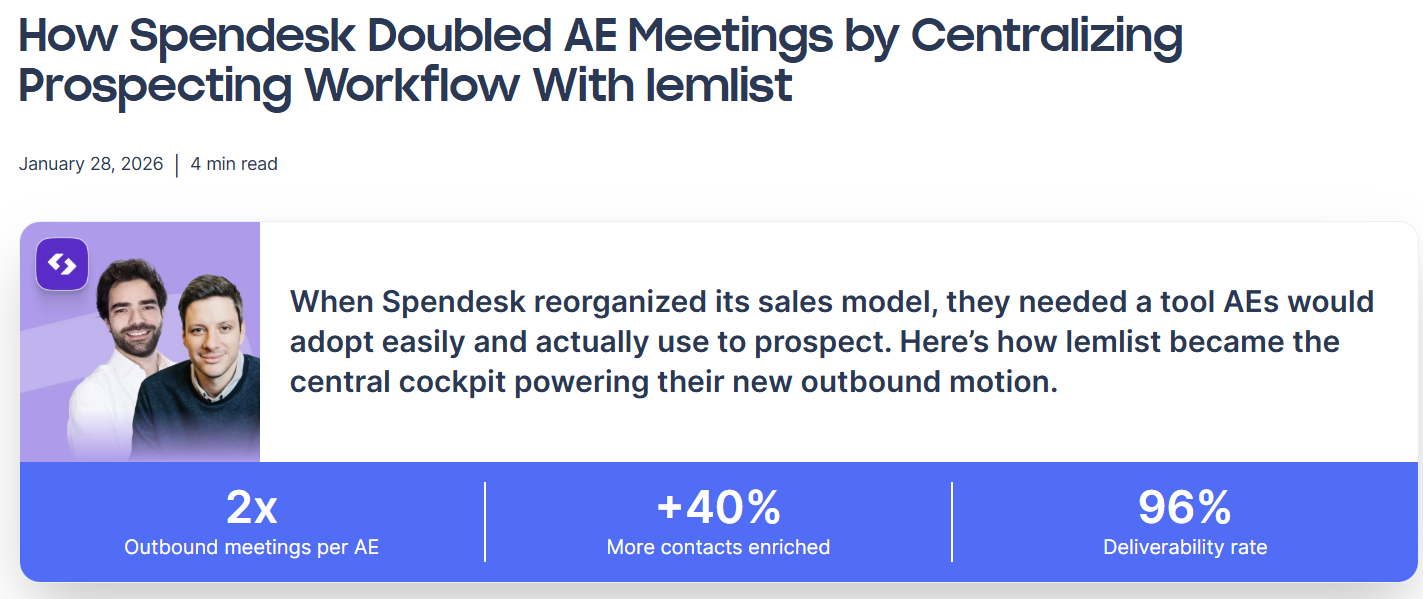
The second asset is social proof. Testimonials with concrete metrics ($30K in closed deals, 75% response rate), a wall with 65+ reviews, logos like Uber and Cloudflare. But what stands out are the playbooks. Thirteen user guides that explain how to set up a campaign, what sequence they used and what results they got. Short, actionable and specific.
The third asset is the academy and community. Lemlist has an academy with step-by-step tutorials, an active community on Slack and Facebook where users share templates and strategies, and recurring webinars with the team. It's an ecosystem where users learn from each other, share what works and solve doubts before opening a support ticket. Few competitors have a community with that level of participation. And for Lemlist, every user who teaches another is a retention argument that costs nothing.
Five decisions slowing their next leap
The first thing your prospect reads doesn't speak to what they need
"AI sales engagement platform for precision outbound." A salesperson isn't searching for "precision outbound." It's the same mistake Amenitiz makes with "Software for Hotels" and Payhawk with "Smart money just got smarter": the H1 talks about the product, not the customer. They want more meetings, emails that land in the inbox, not to burn their domain. The positive reviews say it better than the marketing: "made outreach easier to manage", "I wanted my emails to land in the inbox." Those phrases should be in the first thing you see, not on G2 (the software review platform where users evaluate tools). And visual personalization, which is what customers praise most, appears as just another line in the feature list. Putting what hurts the salesperson in the main title and moving personalization to the first visible spot would change the first 5 seconds of the visit.
The curse of knowing too much about your own product
Prospecting, sequences, data, domain warmup, LinkedIn, calls, WhatsApp. 15+ features compete for attention. That makes it hard for a new user to understand what Lemlist does and where to start. There's no demo or product image in the first view. The prospect doesn't see how it works until they sign up. Simplifying the message to three clear pillars and adding a visual demo would reduce friction in the first 10 seconds.
What Lemlist actually costs when you add it all up
$55 to $109 per user per month sounds reasonable. But the credit model scales without being visible: $0.05 per verified email, $0.20 per phone number, up to $4 per LinkedIn signal. A team of five on the multichannel plan could be paying between $435 and $934 per month. Instantly charges $97 for the same team with unlimited sends. There's no total cost calculator on the site. If Lemlist charges more, it needs to justify it with transparency: a calculator that shows cost based on team size and expected usage.
Fast responses, slow solutions
"Customer support is incredibly friendly and utterly incompetent." The team responds quickly but doesn't solve problems with active campaigns. What exists is basic support. What's missing is a level of service with enough expertise to help the customer use the tool and get results with it. In a product with a steep learning curve (125 mentions on G2, the software review platform), that difference matters. Those who master the tool stay. Those who don't leave for Instantly or Apollo.
The question isn't whether you need more support people. It's how you distribute expertise between those who answer basic questions and those who help configure campaigns that actually work. A Customer Success team dedicated to the first 30 days would change retention where it's lost the most. And retaining a customer is always cheaper than acquiring a new one.
The star feature that comes with fine print
LinkedIn automation is one of the main arguments for the multichannel plan. What the website doesn't say: it violates LinkedIn's terms of service. Guillaume himself was banned. Lemlist's academy acknowledges it between the lines: "automation creates risk of getting your account restricted." Reviews confirm it: "Expensive and Potentially Risky for Your LinkedIn Account." In a product that builds trust with SOC 2 and 4.6 on G2, hiding this risk erodes what they're trying to build. A dedicated page with best practices and recommended limits would turn the objection into trust.
A loop that already has the pieces but isn't connected
Lemlist already has a prospecting playbooks page (lemlist.com/outbound-playbooks) with cases from companies like ElevenLabs, Paddle and Pigment. Each playbook shows the complete strategy: daily routine, tools, sequences and measurable results. They publish a new one every month and accept submissions from professionals who want to share their case.
The problem: these playbooks are created by the Lemlist team. The 50,000 users getting results every day have no way to contribute. Campaigns with 30%, 40% response rates, sometimes higher. Those results live inside the platform and die there.
What's missing: opening that library so users can publish their own playbooks with verified results. A salesperson who gets a 38% response rate with visual personalization publishes their tactic, the sequence they configured and the numbers they got. Their company gains corporate visibility within the Lemlist community. Other users find proven tactics they can replicate. And if they want, they can also share it on their own networks, but that's optional.
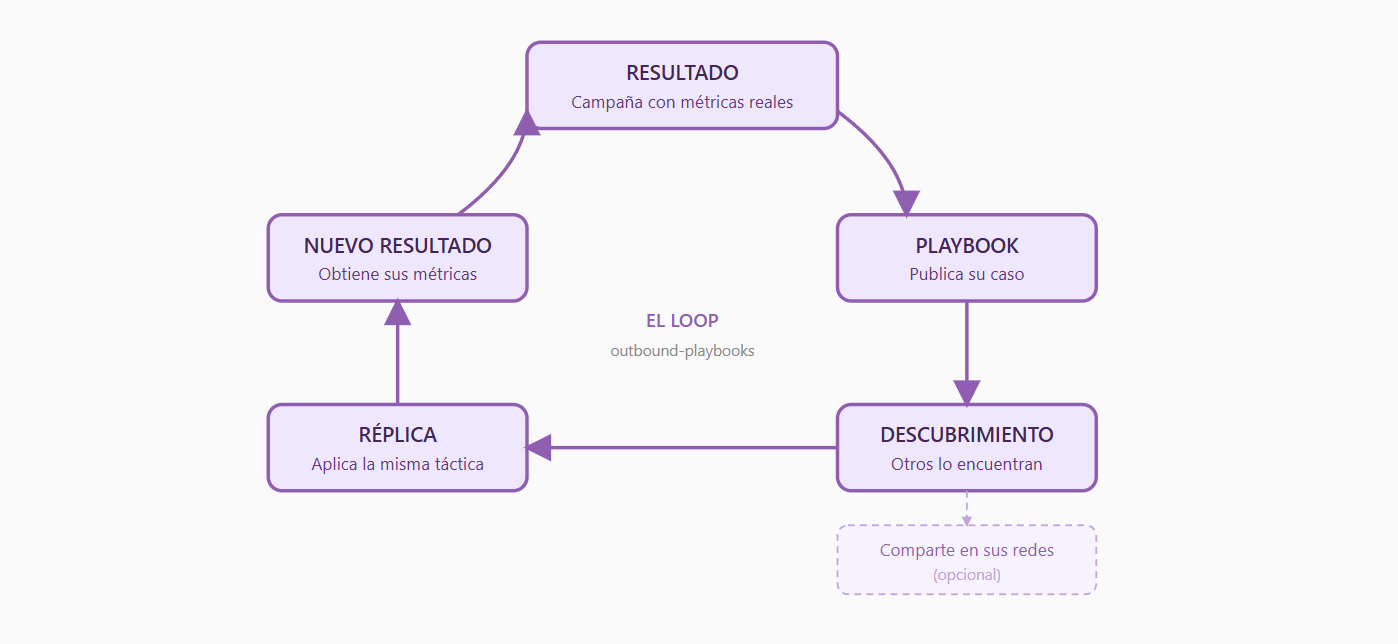
Guillaume generates demand from the top. This loop generates it from the 50,000 users already inside. The pieces exist. What's missing is connecting them.
If I could only change one thing
How many times is the first thing you see on a company's website completely unrelated to what you actually need? Lemlist says "AI sales engagement platform for precision outbound." Their customer wants more meetings and emails that don't end up in spam.
If I could only change one thing this week: rewrite that first line from the outcome. "More meetings, fewer ignored emails." "Prospecting that generates conversations, not spam." The subtitle explains the how. But the first thing you read has to speak to what you want to achieve.
My second phase: move visual personalization to the first visible spot on the website. It's what customers value most, what competitors don't have, and what the website buries in the feature list. One image showing how you personalize an email with the prospect's photo says more than fifteen lines of text.
What Lemlist teaches about having an unrepeatable channel
Guillaume built something most founders never achieve: an acquisition channel nobody can copy. A personal brand that generates 90% of demand for a $40M business.
He's not the only one who's done it. Tyler Denk took beehiiv to $20M in revenue by publishing every week what he was building. Adam Robinson made $5M in 13 months with RB2B by sharing his process in real time. Dharmesh Shah has been positioning HubSpot from his personal profile with over a million followers for years. Founder profiles generate up to 3x more engagement and nearly 3x more conversion than their companies' corporate pages.
Before adding the next feature or the next acquisition: is my product relating to my customers, or just meeting expectations? We think we make rational decisions, but we stick with products that make us feel something. And that almost never starts with a feature list.