ANALYSIS #01
How I'd grow Amenitiz
15,000 hotels on a platform with strong product and marketing that falls short.
6 min read · April 2026
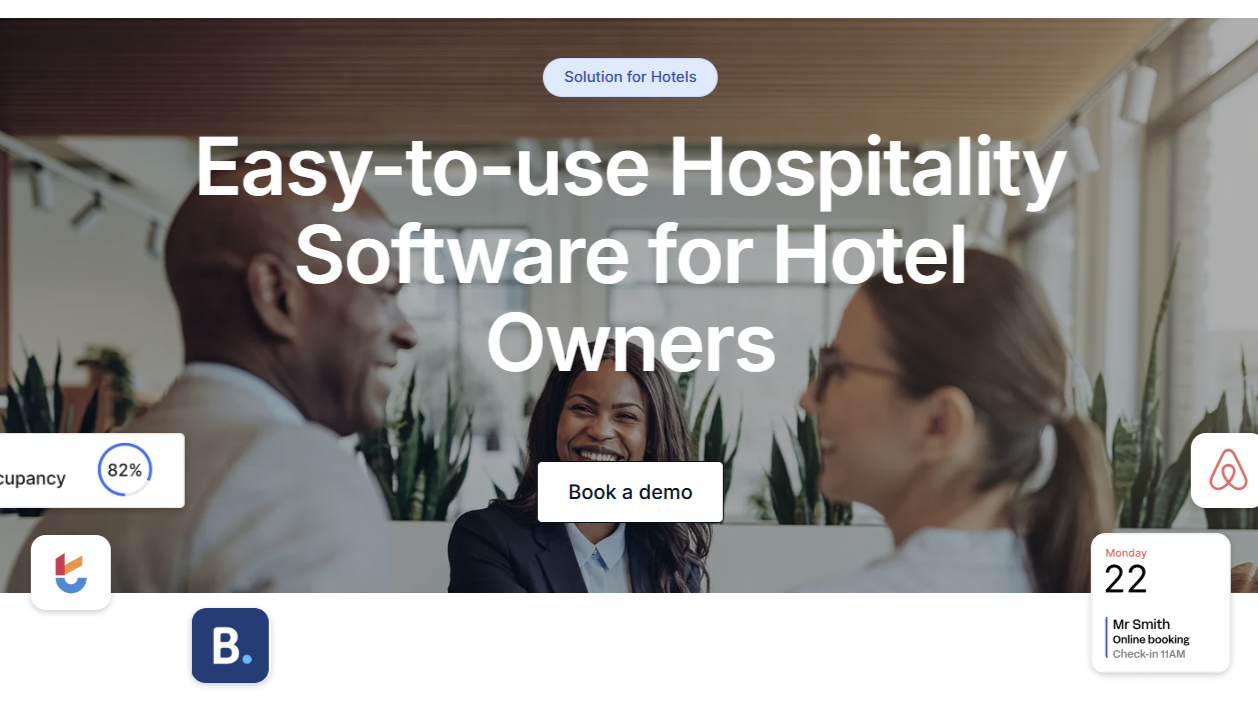
Amenitiz raised €38.9M to free hotels from Booking and Expedia. Their H1 says "Software for Hotels." If there's one contradiction that sums up everything right and wrong with their marketing, that's it.
The model behind 15,000 hotels using the platform
Amenitiz is a SaaS for independent hoteliers (3-30 rooms) who want to generate more revenue without depending on OTAs (Online Travel Agencies) like Booking, Airbnb, Expedia.
It has three pillars: it manages hotel operations and syncs availability, generates direct bookings without commission, and can handle performance marketing with AmenitizBoost, where they only charge on the results they generate.
Pricing ranges from $42 to $125 per month per property. Boost adds 12% on the bookings it generates.
They have 15,000+ hotels in Spain, France, Italy, Portugal and the UK. ARR of €15.2M in 2024, growing at 70% year-over-year. They just closed a Series B of €38.9M in November 2025. With that investment, they're likely focused on scaling. With a strong portfolio and social positioning, there are improvements on their website that could amplify their acquisition power without much effort.
What's working
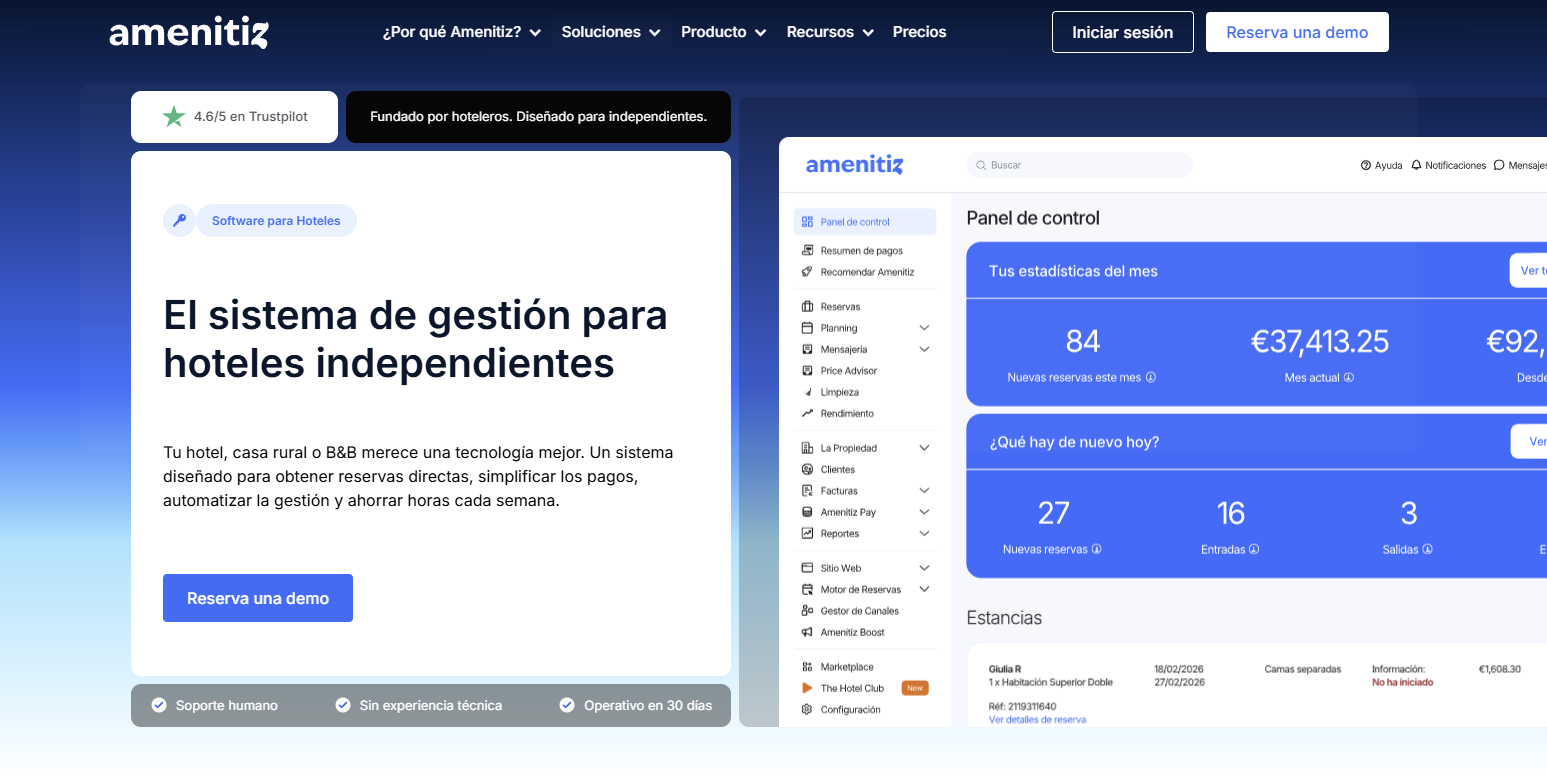
The hero's micro-CTAs work. "Human support · No technical experience needed · Operational in 30 days." Three objections that exist in SaaS, answered before the visitor even asks.
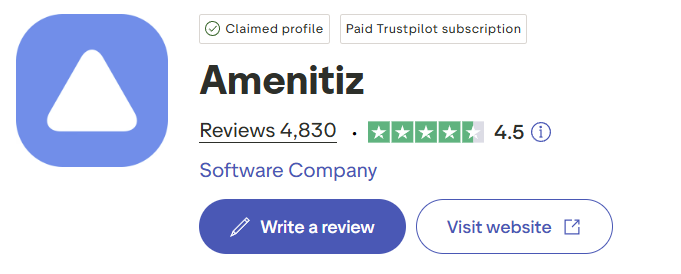
Social proof is solid. 4,600+ Trustpilot reviews (4.6/5), concrete results (+23% occupancy, 25h saved/month) and logos with context: hotel name, rooms, country. "La Terjera de Lozoya, 7 rooms, Spain" gives much more confidence than just a grid of hotel logos, which is what most pages look like.
Support seems to be their hardest-to-copy differentiator. The positive reviews are mostly about having an exceptional team that responds in under 5 minutes.
Four problems slowing conversion
The H1 speaks about the product, not to the customer
"Software for Hotels" describes a category. Not a benefit, not a reason to keep reading. For a cold user it can be unnecessary friction. It makes sense for SEO, but with their current positioning they could change it.
The visitor coming from Google doesn't know they could recover the 20% commission per booking that OTAs charge. This profitability pain point doesn't appear in the H1. It appears on the sixth scroll.
The most direct alternative to the pain: "Booking takes 20% of every reservation. Amenitiz helps you get it back."
The current subtitle tries to say four things at once: bookings, payments, management, hours. When you say everything, you say nothing. Three points, ordered by what hurts most.
The journey breaks when you want to know the price
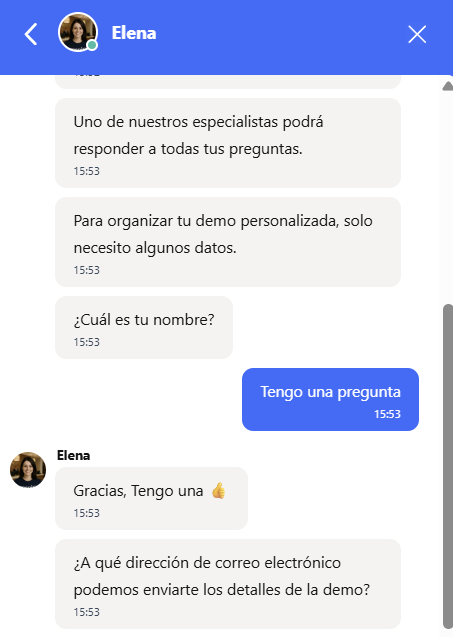
80% of B2B buyers research prices before talking to sales. At Amenitiz there are two options: the pricing page or the chatbot.
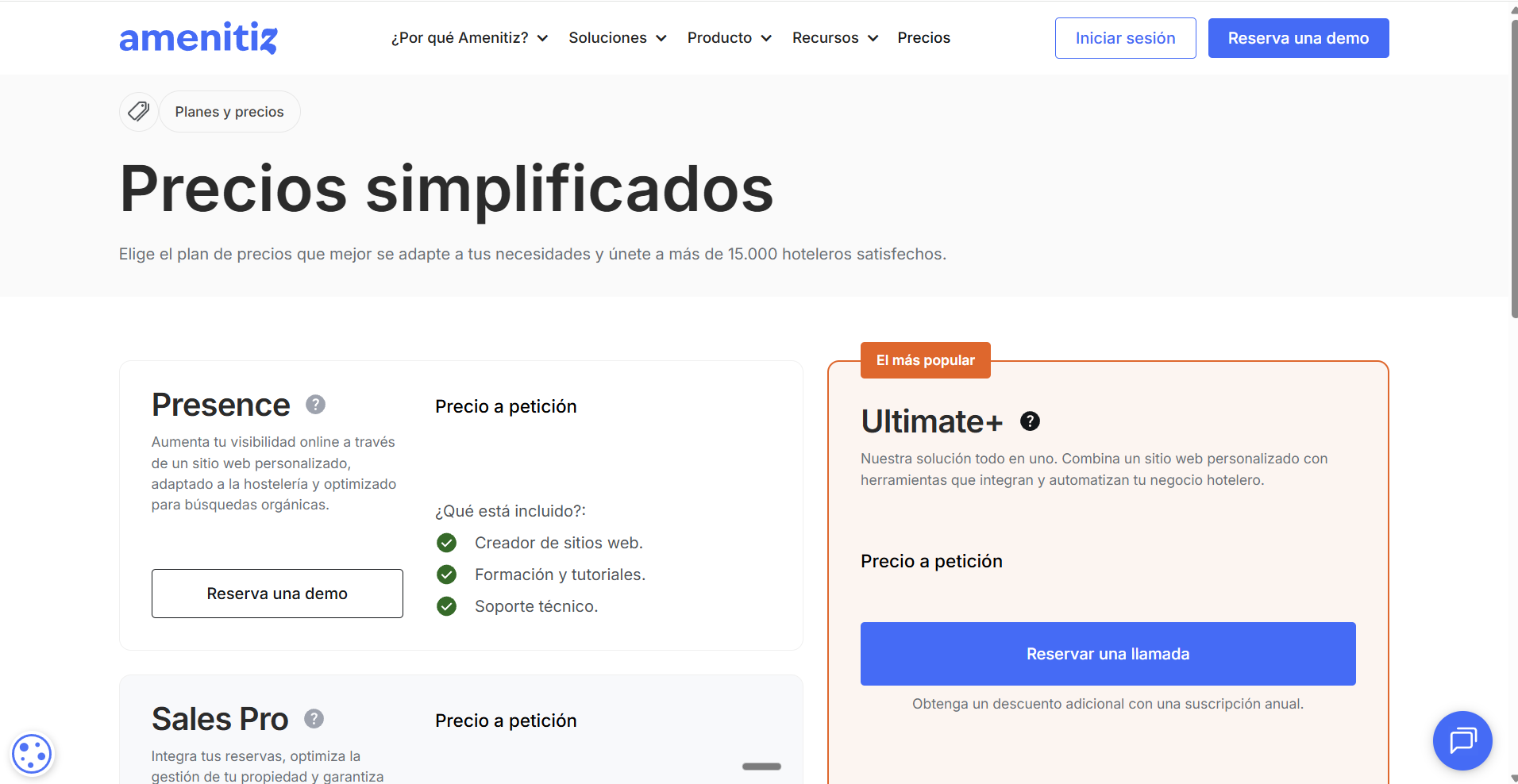
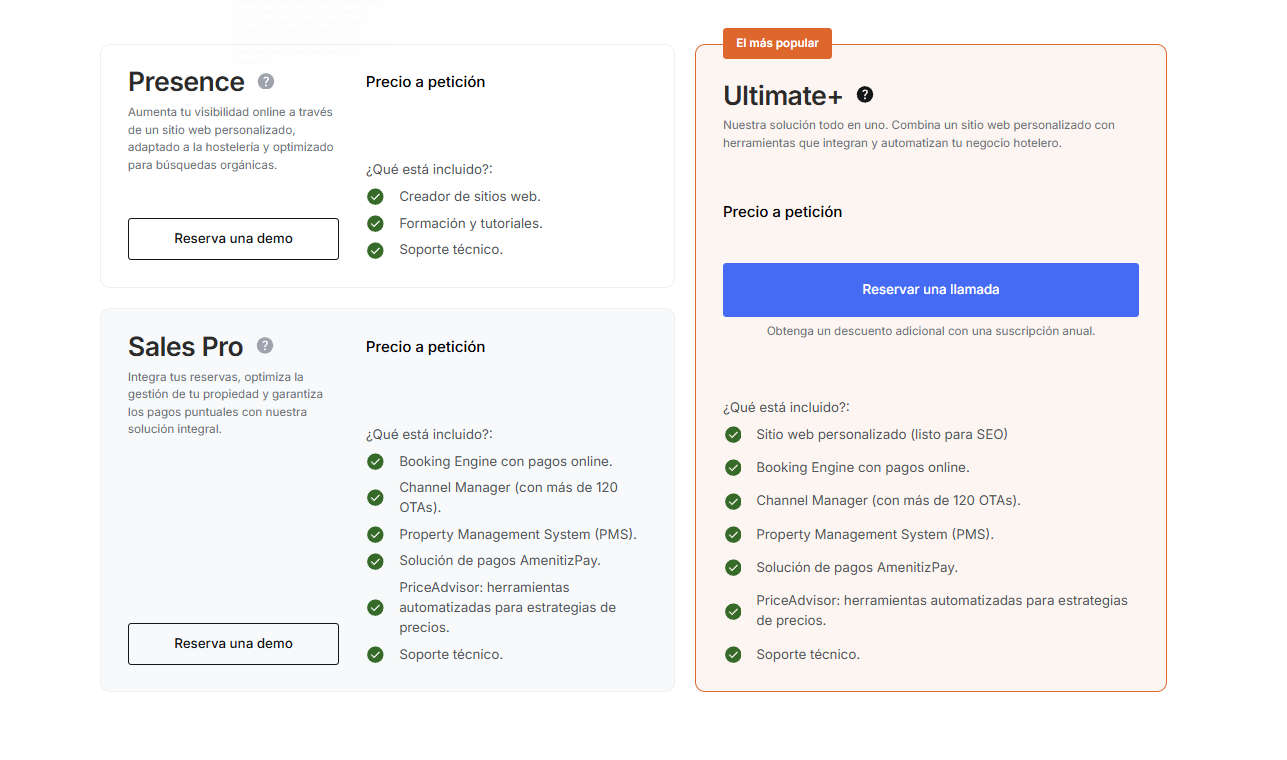
The page shows three plans but no prices. Everything on request. The visitor with intent can't calculate if it fits their budget without becoming a lead.
The chatbot doesn't solve this either. It accepts fake information, responds with rigid rules and has no business context. With current LLMs, giving it context on FAQs could take a couple of days. The result would be something that answers real questions instead of forcing a form.
The pricing page blocks the decision in three ways
No visible prices means no decision is possible. Showing "from $42/month" already reduces friction without compromising negotiation. It's the same pattern I see in Payhawk, where four out of five plans show no price.
The current layout arranges plans in a U shape. A horizontal table with features in rows and plans in columns makes the difference between options obvious.
Reviews mention what the page doesn't say: minimum one-year commitment, three months notice to cancel. A direct FAQ section before the CTA would eliminate their worst Trustpilot reviews before they happen.
Customer Support is not the same as Customer Success
Positive reviews praise the support. Negative ones say something different: "I committed for a year and had trouble growing."
Customer Support solves technical problems, and Amenitiz's team does it well. It's a problem that also shows up in Lemlist, where support responds quickly but doesn't solve active campaign issues. Customer Success grows the customer: are you making the most of the booking engine? Did your occupancy improve? Do you know how much direct revenue you're leaving on the table with your current plan?
If most customers are on Presence ($42) without access to the full product, and nobody shows them why to upgrade, churn is predictable. The Customer Success division probably doesn't exist yet due to size, but soon it won't be justifiable not to have one.
The Hotel Club: the most underused asset
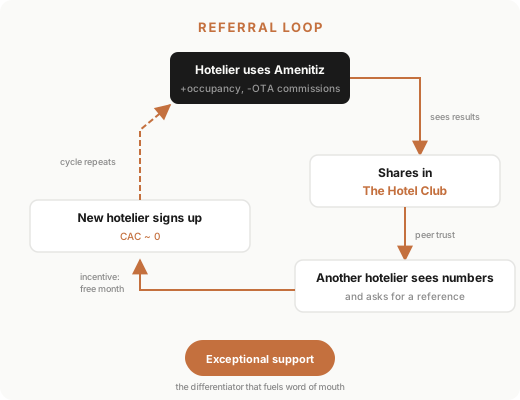
20,000+ hoteliers in their own community. Same customer profile. High peer trust. No structured referral program. A hotelier who convinces another has a CAC close to zero. It's the channel with the best possible ratio, and it's not activated.
Where I'd start
What I've learned at Mentorhood is that to generate traction you have to speak to the person from what matters to them, not from what you know about the product.
Amenitiz knows it has a PMS (Property Management System), a channel manager and a booking engine. The hotelier knows the commission per booking is 20%. These are two different conversations and right now only one is happening: management, not revenue.
First change: I'd run an A/B test on the H1 with existing traffic. Two weeks, no extra cost. If time on page and CTA clicks improve, it changes without issue. The data justifies it.
At the same time: visible prices on the page and horizontal pricing layout. Remove friction for whoever is already convinced. In parallel, I'd work on giving the chatbot context and improving lead quality. Assuming growth from the Series B, this part will be especially important for the team (quality > quantity).
My second phase, once the above is stabilized: partnerships with hotel associations (FEHR in Spain, UMIH in France, Federalberghi in Italy). That's where Amenitiz's real asset lies: exceptional customer support that works better with quality leads than volume leads.
One question before scaling
What could slow Amenitiz's conversion at this growth stage isn't the product. It's the product's communication, and perhaps knowing so much about your product that you have the "curse of knowledge."
Before scaling to new customers with the €38.9M, the question is always the same: what questions does the customer have right before deciding, and where are the answers on my website?