ANALYSIS #07
Madrid doesn't fund startups. It does something better
What I learned at a Kfund event with the COO of Poolside, the AI startup valued at $3B.
4 min read · April 2026
How do you choose who you work with?
Yesterday I went to an event hosted by Jaime Novoa where Margarida Garcia was speaking. She works at Poolside, a company that's raised $600M, valued at $3B, and helps large enterprises implement AI in their core systems. She's been working on AI longer than ChatGPT existed, back when the conversation wasn't about prompts but about whether the whole thing was even viable.
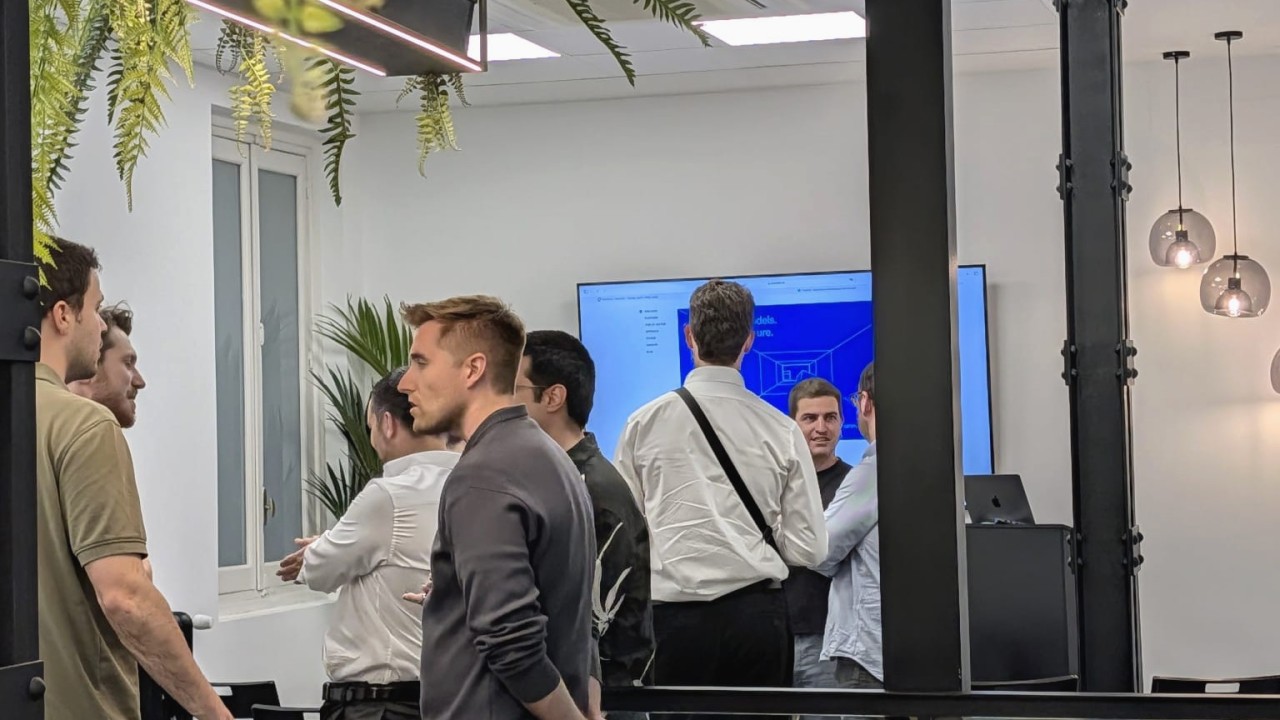
She started her talk by talking about her life. Which is for me the best way to connect with your audience.
She's from Lisbon and studied finance in Segovia, a city 100 km from Madrid with not much going on. Boredom, she said, is the main driver of creativity. When there's nothing around to distract you, you stop consuming and start building.
Her career started there, in a quiet city with too much time and not enough noise to hide behind. Worth spending some time thinking about that. Is your life sufficiently boring?
On technical roles in the AI era
Someone asked whether it still makes sense to pursue a technical career if AI can code.
The answer was yes. And it's not about output that people can get by prompting, it's about how engineers are trained to think. They structure information differently, frame problems in ways that extract more from any tool they touch. That mental model doesn't come from a course. It comes from years of thinking in systems, of being forced to be precise when ambiguity comes running at you.
Take marketing as an example. When I use AI, I think about the results I want from audiences, messages, and conversion. I ask "what should we say and to whom." An engineer working on the same problem asks "what is the system doing, where does it break, and what input produces the best output." That second framing extracts fundamentally different answers from the same tool. AI was built for coding, keep that in mind while using it.
This gap will widen as the tools get better. The bottleneck won't be access to AI. It will be knowing how to think with it.
On who you work with
She's never worked with someone she couldn't spend a weekend with.
It sounds like a cliche until you're 18 months into a project with someone whose energy slowly drains yours, and you realize the skill gap you thought you could live with has become the least of your problems.
Thinking about it, it's easier to hold that standard as a COO than as a middle manager. When you're senior enough, you have the pull to choose. When you're starting out, you take what you can get and hope the fit is good enough. But the principle holds at every level: when you hire, you're not adding a skill set, you're adding a dynamic person to your 8-10-12-hour life that already has its own physics.
Get that wrong, and no amount of competence covers the cost of working with the wrong people.
On constraints
You can't play the game well if you don't know the rules you're playing by. She meant it with AI, but it works at any level and industry.
Know your constraints. Teammates, funding, legal, market. You can't find the right move if you don't first understand the board you're on. This applies whether you're building a company, scaling a product, or figuring out your next career move. Clarity about limits isn't your constraint. It's the starting point for doing anything meaningful within them.
On what operations actually means
Her goal as COO: make ops the smallest team.
Not small for the sake of it. Small because the measure of a good ops function isn't how many people it has, it's how much it can move with the least friction. Every new hire in ops that you didn't need to make is a system that's working. Efficiency isn't a headcount target, it's a design principle.
It also requires something most leaders skip: giving people the tools and context to not need you. Your job isn't to be involved. It's to make your involvement unnecessary.
Poolside raised $600M. The average enterprise AI implementation takes one to two years. In a world that sells speed, they're betting on depth, on the kind of work that takes long enough to actually change something.
If you're in Madrid and you're not going to these events, you're missing THE thing this city does better than anywhere else.