ANALYSIS #05
Tamara Cohen
From selling bagels at a market stall to building a brand people recommend on their own.
4 min read · May 2026
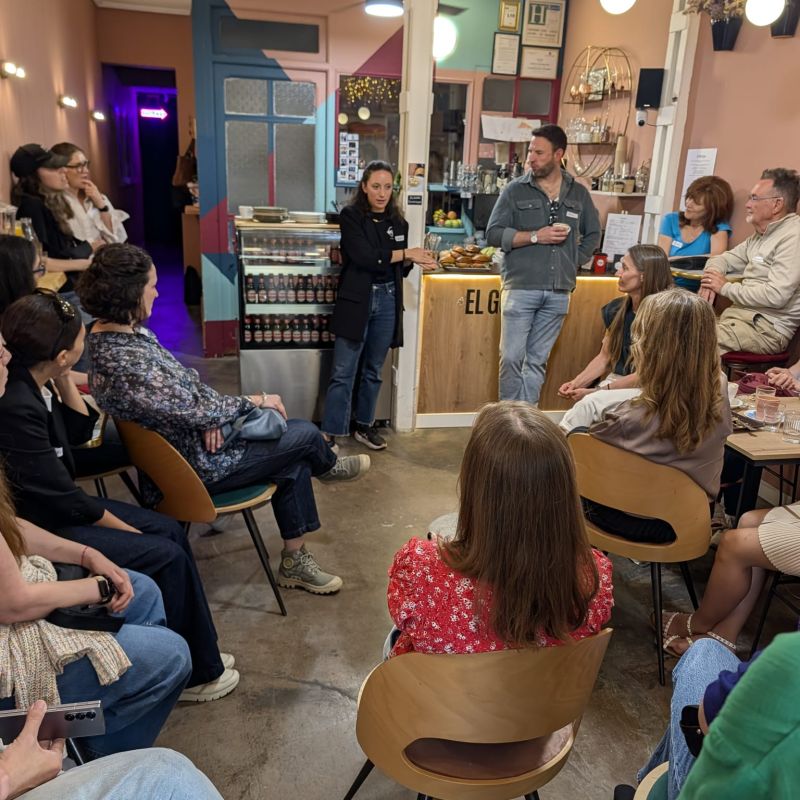
Tamara Cohen started as a bagel dealer. Her boyfriend's apartment, closed boxes, cash in hand, photos taken from the kitchen floor. That was the whole operation.
Five years later she has two locations and a bakery. What she built is impressive but I left thinking more about what she had to stop doing at every stage to keep growing. And this is more about doing less than doing more.
You start doing everything because you love it
You bake, deliver, post, answer messages at midnight. Then one day you notice you're tired. You don't enjoy all of it the way you used to. You're drained, probably burned out, and the thing you started because it made you happy is now the thing that's taking everything from you.
So you learn to delegate. Not just hand off tasks but be painfully clear about what done looks like. Most founders don't choose this willingly. It comes from forced growth. A second location, a new product line, something that physically makes it impossible to be everywhere. You can't cover both floors. You can't open two doors at the same time. So you let go because there's no other option. And then you realize it should have happened earlier.
You protect time to think
You protect time to think about where this is going instead of just keeping it alive. Maybe it's 6am before anyone else is up. Maybe it's leaving early one day a week to sit somewhere quiet and ask yourself where this thing should be in two years. Tamara does it every day, even on vacation. Because if you don't block that time, the operation eats it.
The daily stuff is always more urgent, always feels more "important." Answering that message, fixing that issue, covering that gap. It makes you feel productive and that's the temptation. But productive and strategic are not the same thing. You can be productive every single day and still end up running something you never decided where it's going.
You learn who to hire
Not your friends. Trust and competence are different things. When you work with friends, disagreements get personal fast. People who care about you but don't agree with your decisions will have a harder time separating the two. Different visions become personal conflicts. And you end up avoiding hard conversations to protect the friendship, which means the business pays the price. You need people who are great at the job.
The money
If your personal account and the business account are the same, you don't actually know if you make money. You just know it moves. Same with services: you delivered, but how many hours did that take? If you can't answer that, you can't price anything properly.
And one day things happen without you
New staff you didn't interview. Decisions that got made while you were somewhere else. A problem that got solved before you even heard about it. The first few times that happens it feels wrong. Like you're losing grip. But it's not loss. It's the business growing past the point where it fits inside one person's head. And that's fine. That's actually the whole point.
The bagels are not going to keep you warm at night. Not going to prepare you dinner. Not going to ask how your day was. Your friends will be there whether the business works or not. Your family will be there. Your health will be there or it won't, depending on what you prioritize now. The business is part of your life but it's not your life.
Set limits. Don't answer at midnight just because you saw the message. Write it down for tomorrow. Don't let clients or staff get used to you being available at all hours. The business survives when you step back. And you get your life back when you stop being the business.
It started on a kitchen floor with a box of bagels and a dream. The dream is still there. It just doesn't need you in the kitchen anymore.